Rivers
Moving water that often holds active, quick fish and may reward casts near bends and rocks.
Knowing where and when to cast is as important as knowing how. This guide explains how locations, time and weather usually shape what you catch in fishing games.
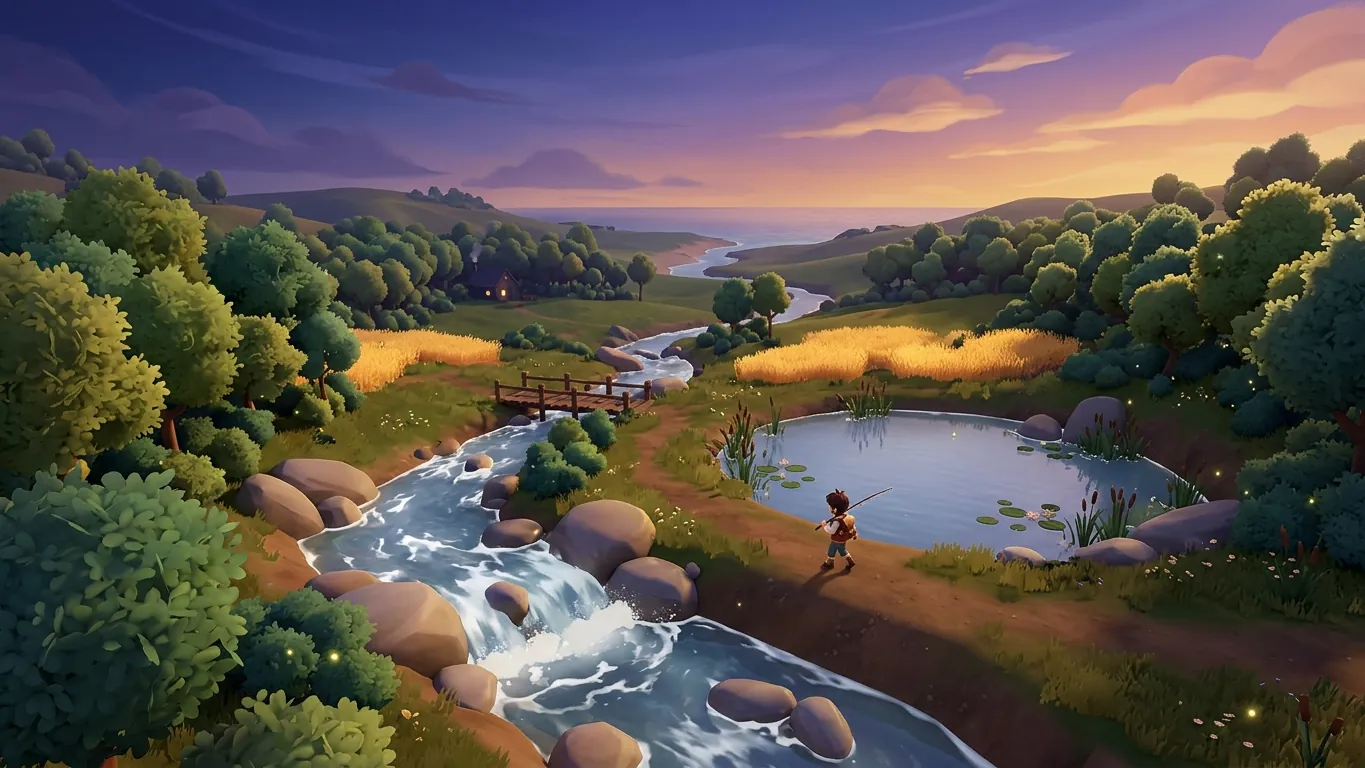
In most games with fishing, each body of water has its own set of fish. Rivers, lakes, ponds and the sea typically offer different species, and some rare fish appear only in one particular spot. This design encourages exploration and gives each location a distinct personality.
When you discover a new area, spend a little time fishing there even if you are busy with other goals. Early catches give you a sense of what lives in that water. Over time you build a mental map of where to go for specific fish, which is especially useful when a quest, recipe or collection asks for something particular.
Many fishing systems tie certain fish to specific hours. Some appear only in the early morning, others at night. Weather can play a similar role, with rain or storms bringing out species that stay hidden on clear days.
If you keep catching the same common fish, try returning to the same spot at a different time or in different weather. This simple change often reveals new catches. Seasons may matter too, especially in farming and life-simulation games that follow a yearly calendar. Because the details differ between games, any in-game encyclopedia or collection log is worth checking, as it often hints at when and where a fish can be found.
Game designers frequently place visual hints on the water. Bubbles, ripples, splashes or shadows may mark a spot where fish are more active. Some games show fish silhouettes swimming beneath the surface, letting you aim your cast at a particular target.
Pay attention to structure as well. Fishing games often reward casting near rocks, fallen logs, reeds or drop-offs, mirroring how real anglers think about where fish shelter. Even when a game does not spell this out, experimenting with casts near different features can turn up surprises. Patience helps here: watching the water for a few moments before casting is rarely wasted time.
Details vary by game, but these patterns appear often across the genre.
Moving water that often holds active, quick fish and may reward casts near bends and rocks.
Large, calm water with a broad mix of species and good spots for longer casts.
Small and close to home, ideal for practice and common catches.
Sea fishing that frequently introduces larger or unusual species.
Caves, mountain pools or secret spots that may hold rare fish.
Many games include a built-in log of every fish you catch, but keeping your own notes can still help. Write down where you caught something unusual, what time it was and what the weather was like. Over several sessions, patterns start to appear that make planning trips easier.
A journal also adds a pleasant layer to the hobby. Looking back at your first small catches and comparing them with later finds is a nice way to see how far you have come. Whether you use a notebook, a simple document or just a mental list, the habit of noticing details is what turns casual fishing into a skill.
 Why fishing and farming games feel so calming
An opinion piece on why many players find fishing and farming games calming: gentle challenges, steady routines, visible progress and echoes of real pastimes.
Read more
 Animal care basics in farming games
An introduction to animal care in farming games: choosing your first animals, building a daily routine, setting up barns and expanding at a comfortable pace.
Read more
 Rods, lures and upgrades in fishing games
Tips on fishing gear in video games: what rods, lines, lures and bait usually do, when upgrades make sense, and how to avoid spending resources too early.
Read more