Fishing game basics: cast, hook and reel
Most fishing games are built around the same three moments: the cast, the bite and the fight. This guide explains each one and offers a simple routine for getting comfortable with any fishing system.
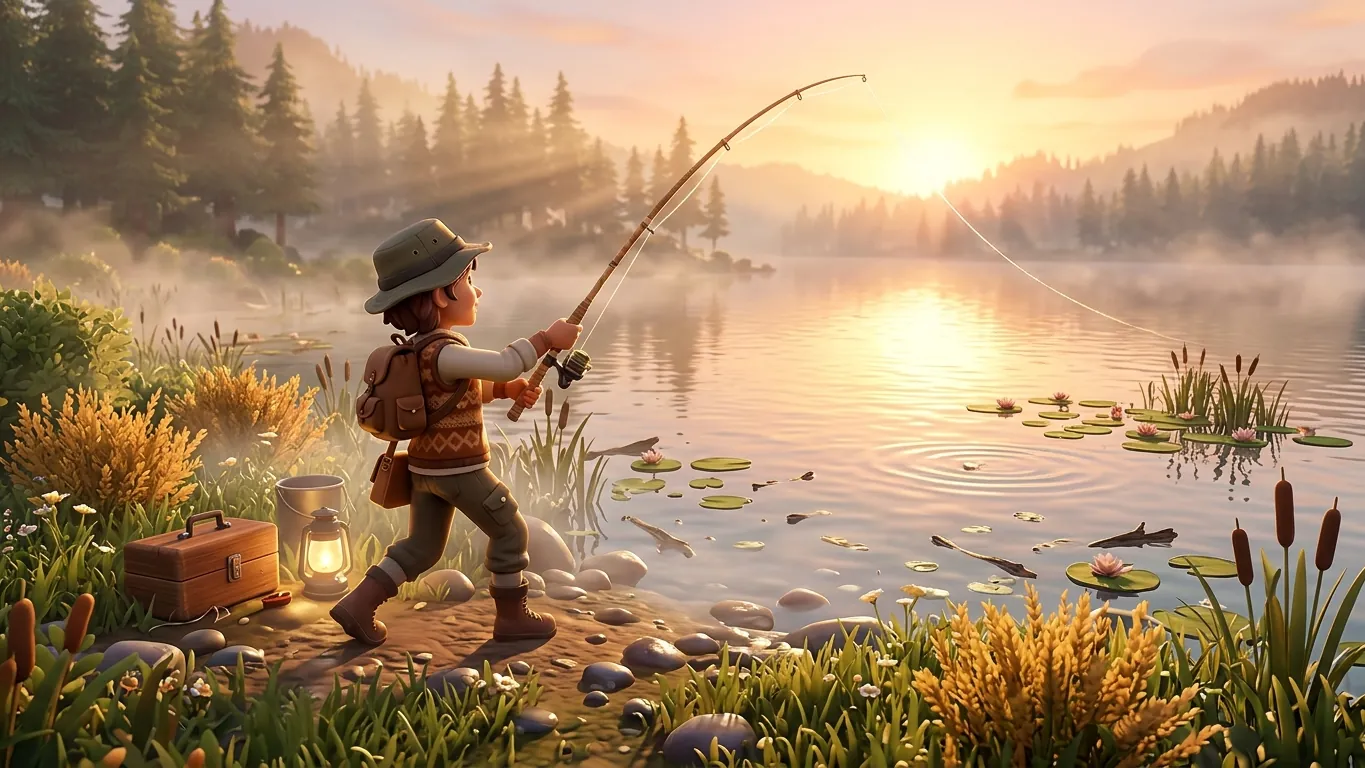
How most fishing mechanics work
Fishing appears in many kinds of games, from dedicated fishing simulations to farming and life-simulation titles where it is one activity among many. The presentation changes a lot, but the underlying structure is surprisingly consistent. You choose where to cast, you wait for a fish to show interest, you react when it bites, and then you bring it in while trying not to lose it.
Understanding this loop helps you learn new games faster. When you pick up an unfamiliar title, look for how it handles each stage. Does casting distance matter? Is there a visual or sound cue for the bite? Is the fight a timing minigame, a tension meter or a test of patience? Once you can name each part, you know what to practice.
Casting: distance, aim and timing
In many games, the cast is controlled by holding a button to charge power and releasing it at the right moment. A longer cast can reach deeper water or spots farther from shore, where different fish may live. Some games reward accuracy instead, letting you drop the lure close to structures like logs, rocks or weed beds.
A common beginner habit is to always cast at full power. That is not always the best choice. Short, precise casts are often more useful near structure, and they save time when you are fishing the same spot repeatedly. Try a few casts at different strengths to learn how the power meter feels before you start chasing particular fish.
The bite and the hook set
After the cast comes waiting. Games signal a bite in different ways: the bobber dips, the rod tip shakes, a sound plays or the controller vibrates. Many systems include small nibbles before the real bite, and reacting too early can scare the fish away.
The hook set is usually a quick press at the right moment. The timing window can be generous for common fish and tighter for rarer ones. If you keep missing bites, slow down and watch for the strongest cue rather than the first movement you see. Playing with sound on often helps, because audio cues tend to be more precise than visual ones.
Reeling and line tension
The fight is where fishing systems vary most. Some games use a bar that you keep inside a moving zone. Others show a tension meter that rises when you reel and falls when you let the fish run. In both cases, the core idea is balance: pull too hard and the line may snap, pull too little and the fish escapes.
A useful habit is to reel in short bursts rather than holding the button continuously. When the fish makes a strong run, ease off and let it tire. When it slows, reel steadily. Larger or rarer fish often have longer, more aggressive runs, so patience matters more than speed. Better rods and lines, when a game offers them, usually make this balance more forgiving.
A simple routine for your first sessions
Use this routine whenever you start a new fishing game or a new fishing area within a game.
- 01
Pick one calm spot
Choose an easy, accessible location close to where you start so you can focus on the controls.
- 02
Test your casting range
Make several casts at different power levels to see how far and how accurately you can throw.
- 03
Learn the bite cue
Watch and listen through a few bites without worrying about the result, just to learn the signal.
- 04
Practice the fight
Focus on keeping tension balanced instead of reeling as fast as possible.
- 05
Move on gradually
Once common catches feel comfortable, try new spots, times of day or weather conditions.
Related articles
 Planning your first season on a virtual farm
A practical guide to your first season in a farming game: starting small, using energy and time well, and saving resources for the season that follows.
Read more
 How to choose crops in farming games
Tips for choosing crops in farming games: growth times, regrowing plants, seasons, weather and processing goods, with key questions to ask before planting.
Read more
 Reading the water: finding fish in games
How to find fishing spots in video games by reading locations, time of day, weather and visual clues on the water, plus tips for keeping a catch journal.
Read more